
Do you know how fast the recovery support field is growing? More people than ever need trained professionals to help with addiction and mental health. The U.S. Bureau of Labor Statistics projects jobs for substance abuse, behavioral disorder, and mental health counselors will grow 17 percent from 2024 to 2034. That’s way faster than most careers.
Laitinen Academy offers recovery coach certification built for online learners who want solid training with a clear path. Their program teaches practical skills that match what communities need right now as more places make mental health and addiction recovery a real priority. Recovery coach certification matters because employers want trained people, the field keeps growing, and more individuals need recovery support every day.
In this blog, Laitinen Academy will walk you through getting recovery coach certification online, step by step.
Why Choose Recovery Coach Certification?
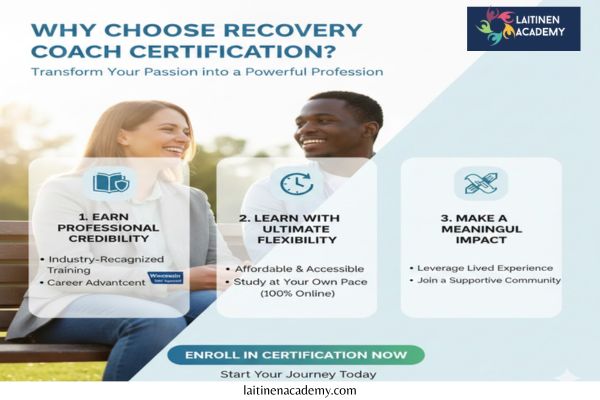
Recovery coach certification isn’t just a piece of paper. It’s about learning real skills to help people when they need it most. In behavioral health, where demand is huge, certified coaches build trust fast. Many people get into this after helping a friend or family member through tough times, and it completely shifts what they want to do with their lives. Programs like those from the Recovery Coach Academy blend heart with hands-on tools. Peer coach training brings that human connection that makes every conversation feel real.
This path fits into your life, even when things are hectic. It opens doors to work in clinics, nonprofits, or online support roles. The demand is steady, and the work means something. You’re investing in a career that changes lives.
Step 1: Check Your Motivation and Fit
Stop for a moment and ask yourself if this is the right move. Many people take an evening to think it over, jotting down what pulls them toward this work. Recovery coach certification takes passion to stick with it when things get hard.
- Write down why you want this. It’ll keep you going.
- Talk to someone already doing the work for a reality check.
- Think honestly about your empathy and where you could grow.
- Shadow a coach for a day to see what it’s really like.
Step 2: Research Accredited Programs
Take your time here, like you’re choosing someone to trust with something important. Compare your options and look for SAC certification so employers know you’re the real deal. Recovery Coach Academy and similar programs offer online formats that let you learn at your convenience.
Find programs that teach ethics and care approaches and give you practice with real scenarios. Read what past students have to say—that’s where you get the truth.
- Check that it’s accredited by organizations like IC&RC so your certificate actually counts.
- Look at costs and how long it takes—most run 6 to 12 months.
- Skim the course details for interactive work, not just lectures.
- Pick a format that doesn’t wreck your schedule.
Navigating the Certification Process
This process mixes excitement with challenge. Early lessons often hit you with insights you weren’t expecting. Recovery coach certification online gives you the freedom to replay tough sections until they click. At Laitinen Academy, it feels less like a classroom and more like a team. Instructors are there to help, not just grade. You walk away with tools that set you up for a real career in behavioral health.
It builds slowly, moving from theory into practice scenarios. Your mistakes teach you more than getting things right the first time. By the end, you’re ready to sit down with someone and actually help.
Step 3: Enroll and Complete Core Training
Hit that enroll button and get started. That first confirmation email hits different—it feels like the beginning of something real. Dive into peer coach training modules right away. They pull you in from the start.
- Keep a steady rhythm. Treat it like a commitment to yourself.
- Knock out the basics—diploma, background check, whatever they need.
- Set up a study spot that’s comfortable and free from distractions.
- Jump into discussions with other learners. Those connections matter.
- Celebrate little wins along the way. It keeps you motivated.
Step 4: Master Practical Skills and Ethics
This is where the rubber meets the road. Students practice conversations again and again, building confidence with every round. Working with a peer coach academy partner helps you fine-tune how you talk and listen.
- Ethics isn’t boring fine print—it’s the foundation of everything you do. Start there.
- Run through scenarios with a partner. Practice until it feels natural.
- Learn the rules around privacy and keeping people’s information safe.
- Build habits that protect you from burning out. This work takes a lot.
- Record yourself and watch it back. It’s uncomfortable, but it works.
Preparing for Your Launch
As you near the finish line, the excitement builds. Certification doesn’t just look good on paper—it opens real doors. That first message from someone you helped often means more than the certificate itself. With recovery coach certification, opportunities show up in clinics, community programs, telehealth roles, and more. Laitinen Academy’s network helps you find your footing faster.
Take a minute to look back at how far you’ve come. Start connecting with people in the field now. Relationships fuel this work.
Step 5: Pass the Exam and Get Certified
The exam tests how well you prepared, not how nervous you are. Steady review makes a huge difference. SAC certification keeps things fair and relevant to what you’ll actually do on the job.
- Pick a date that gives you time to prep without cramming. Then breathe—you’ve got this.
- Use flashcards for core ideas like the stages of change.
- Take full practice exams to build your stamina.
- Sleep well the night before. Your brain needs rest.
- When you pass, celebrate. Even if it’s small, it counts.
Step 6: Build Your Professional Toolkit
Once you’re certified, it’s time to get yourself out there. Put peer coach training front and center on your resume. Many coaches build a small portfolio showing the kind of work they do and how they approach things.
- Start with volunteer work to get comfortable.
- List your recovery coach certification everywhere—LinkedIn, email signature, business cards, all of it.
- Show up to events and meet people. Warm connections lead to opportunities.
- Keep learning. Take workshops, read new research, stay sharp.
- Find a niche. Specializing helps you stand out in a crowded field.
Key Takeaways
- Think hard about why you want this before you start. Recovery coach certification takes commitment.
- Choose SAC-accredited programs for training that employers value, and that fit your life.
- Practice through role-playing and dive into ethics. Real confidence comes from doing the work.
- Study steadily for your exam, then start networking. Your career in behavioral health needs both.
- Never stop learning. The sharper your peer coach training stays, the more doors open.
Frequently Asked Questions (FAQs)
1: How long does recovery coach certification online take?
A: Most programs run 6 to 12 months. They’re built to work around jobs and family.
2: What does peer coach training cost?
A: Expect anywhere from $500 to $2,000. Look for programs that are accredited, like Recovery Coach Academy, so you’re getting real value.
3: Do I need experience before going for SAC certification?
A: Nope. Empathy and a high school diploma help, but plenty of people start without any background in the field.
4: Can I work while getting certified?
A: Online formats are made so that you can study, work, and spend time with your family without going crazy.
5: What kind of jobs can I get after a recovery coach certification?
A: You can work in clinics, nonprofits, telehealth programs, community centers, or even start your own practice in behavioral health.
Start Your Journey: Final Thoughts
Getting recovery coach certification isn’t just about earning a credential. It’s about stepping into work that transforms lives—yours included. At Laitinen Academy, people from all walks of life have gotten certified and started making a real difference. Take that first step today. Someone out there needs your voice in their recovery journey.