
Starting your journey in a Behavioral Health and Wellness Academy can open doors to a meaningful and rewarding profession. Whether you want to support others, grow personally, or build a stable career, the enrollment process is easier when broken into simple steps.
This guide explains each stage clearly so you can move forward without confusion.
Why Choose a Path in Behavioral Health?
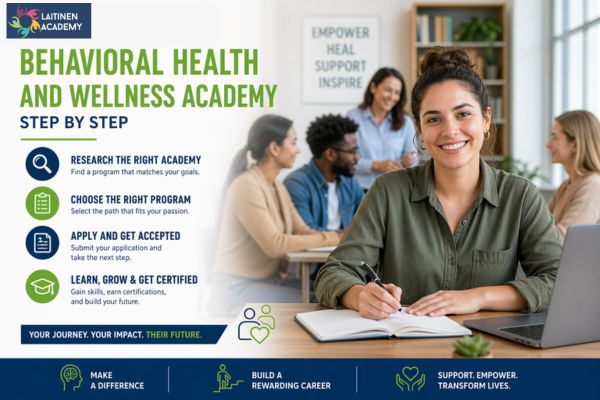
Before enrolling, it helps to understand why this field matters and what it offers.
A career in behavioral health is not only meaningful but also growing rapidly. It focuses on helping individuals improve their mental, emotional, and social well-being.
Here’s why many people choose this path:
- Strong demand for trained professionals
- Opportunity to make a real difference in people’s lives
- Flexible career options in counseling, coaching, and support roles
- Personal growth alongside professional development
This field allows you to work in clinics, schools, community centers, or even independently.
What Should You Know Before Applying?
Before jumping into enrollment, it’s important to prepare yourself with the right information.
Ask yourself:
- What area of behavioral health interests you the most?
- Do you prefer online or in-person learning?
- What is your long-term career goal?
- How much time can you commit to studying?
Basic Requirements
Most academies expect:
- A high school diploma or equivalent
- Basic communication skills
- Interest in mental health and wellness
- Commitment to learning and helping others
Optional but Helpful
- Previous experience in counseling or support roles
- Volunteer work in community services
- Strong listening and empathy skills
Having these in place gives you confidence before applying.
Step 1: How Do You Research the Right Academy?
The first step is finding a training provider that matches your goals.
Look for these key factors:
- Accreditation and credibility
- Course structure and flexibility
- Experienced instructors
- Student support services
- Reviews or testimonials
Take your time comparing options. A well-chosen academy can shape your entire learning experience.
Step 2: What Programs Are Available for You?
Behavioral health academies offer different types of programs based on your interests and career goals.
Some common options include:
- Peer support training
- Mental health coaching programs
- Addiction counseling courses
- Wellness and resilience training
Choosing the right program depends on what role you want in the future.
Step 3: What Are the Admission Requirements?
Each academy has its own entry criteria, but most programs are accessible.
Common requirements include:
- Minimum education (high school diploma or equivalent)
- Basic communication skills
- Interest in helping others
- Sometimes a background check
Make sure you carefully review the requirements before applying.
Step 4: How Do You Prepare Your Application?
Once you choose a program, the next step is submitting your application.
Typical application steps include:
- Filling out an online form
- Providing personal details
- Writing a short statement of purpose
- Uploading required documents
Keep your application clear and honest. Share your motivation and goals.
Step 5: What Happens After You Apply?
After submitting your application, the academy will review it.
You may experience:
- Application confirmation email
- Interview (in some cases)
- Acceptance letter or enrollment offer
Make sure to check your email regularly so you don’t miss important updates.
Step 6: How Do You Complete Enrollment?
Once accepted, you’ll need to finalize your enrollment.
This usually involves:
- Paying tuition or fees
- Signing enrollment agreements
- Accessing your student portal
- Receiving course schedules
At this stage, you officially become a student.
Step 7: What Will You Learn During the Program?
Training programs are designed to prepare you for real-world situations.
You may learn:
- Communication and listening skills
- Mental health awareness
- Crisis response techniques
- Ethical practices in care
Some programs also prepare you for a certified addiction counselor certification, helping you specialize in addiction support.
Step 8: How Do Certifications Help Your Career?
Certifications play a big role in your professional growth.
Many academies offer certifications for mental health counselors, which can improve your job prospects and credibility.
Benefits of certifications include:
- Better job opportunities
- Higher earning potential
- Professional recognition
- Increased confidence
They show employers that you are trained and ready to work in the field.
Step 9: How Can You Balance Learning and Life?
Many students worry about managing their time while studying.
Here are simple tips to stay balanced:
- Create a weekly study schedule
- Set realistic goals
- Take short breaks to avoid burnout
- Stay organized with notes and deadlines
Consistency matters more than perfection.
Step 10: What Support Can You Expect During Training?
A good academy provides strong support to help you succeed.
You may receive:
- Access to mentors or instructors
- Peer support groups
- Online learning resources
- Career guidance
These resources make your learning experience smoother and more engaging.
Step 11: What Opportunities Open After Graduation?
Once you complete your training, many career paths become available.
You can work as:
- Peer support specialist
- Wellness coach
- Behavioral health assistant
- Community support worker
With experience, you can grow into advanced roles or continue your education.
In the middle of your journey, you may find your passion shaping your long-term career in behavioral health, opening even more specialized opportunities.
Step 12: How Do You Take the Next Step in Your Career?
After completing your initial training, you can continue building your skills.
Some students choose advanced programs or specialized certifications.
For example:
- Leadership training
- Advanced counseling programs
- A certified peer coach academy program to expand coaching skills
Continuous learning keeps you competitive and confident in your field.
What Challenges Should You Expect?
Every new journey comes with challenges, and this path is no different.
Common challenges include:
- Adjusting to new learning styles
- Managing time effectively
- Understanding complex topics
The key is to stay patient and focused. Progress happens step by step.
How Can You Stay Motivated Throughout the Process?
Staying motivated is essential for success.
Try these simple strategies:
- Remind yourself why you started
- Celebrate small achievements
- Connect with fellow students
- Visualize your future career
Motivation grows when you see your progress.
Key Takeaways:
- Enrolling in a behavioral health academy is a simple step-by-step process
- Researching the right program is the most important first step
- Certifications improve career opportunities and professional growth
- Time management and consistency are key to success
- Continuous learning helps you advance in the field
Frequently Asked Questions:
Do I need prior experience to enroll?
No, many programs are beginner-friendly and designed for those starting fresh.
Can I study while working full-time?
Yes, many academies offer flexible online options to fit around your schedule.
What jobs can I get after completing the program?
You can work in support roles, coaching, community services, and mental health assistance.
Are certifications really important in this field?
Yes, certifications increase credibility and help you stand out to employers.
Ready to Start Your Enrollment Journey?
Starting your journey in behavioral health is one of the most rewarding decisions you can make. With the right steps, guidance, and mindset, you can smoothly enroll and begin learning.
Choosing Laitinen Academy is your first move toward building a meaningful and impactful career where you truly make a difference in people’s lives.